





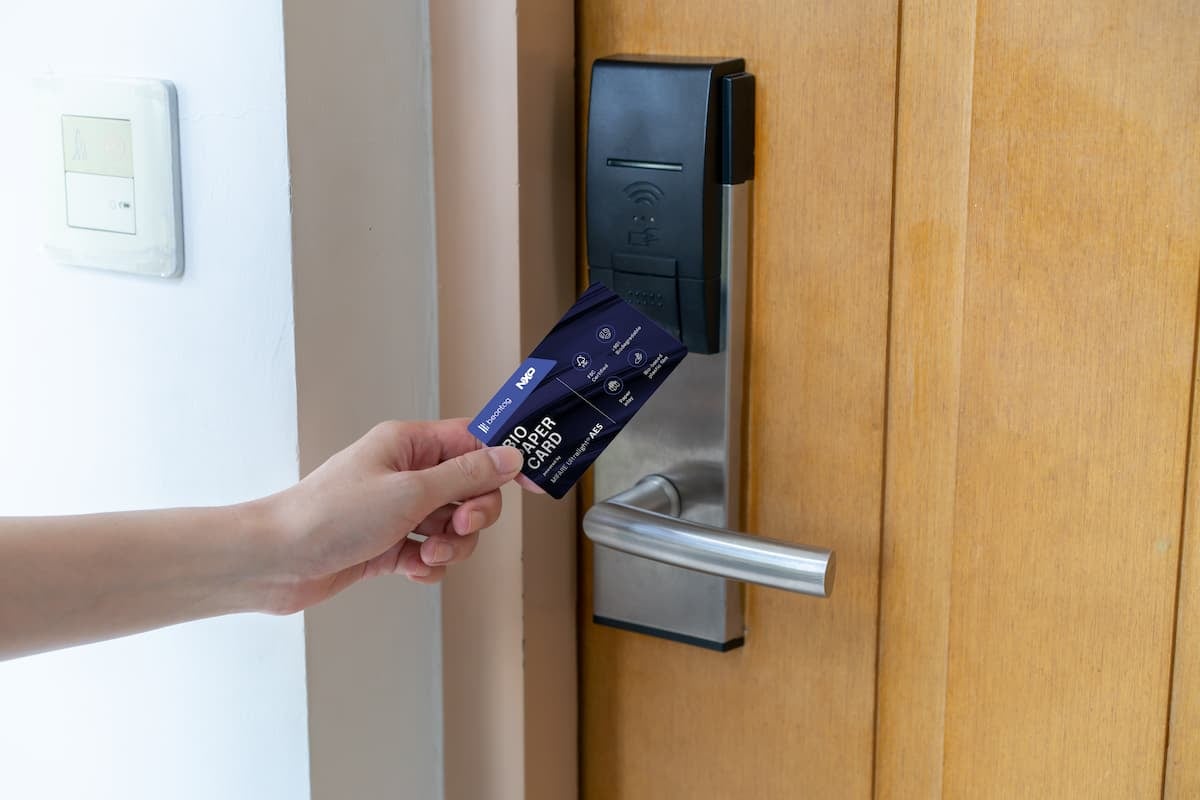
What is RFID Access Control, And What Are Its Benefits? See How The Technology Works

Subscribe to our newsletter!Stay up to date, subscribe to our newsletter!
SubscribeRFID can be used for loss prevention because it reduces retail shrink and improves store security by enabling item-level visibility, automated exit control, and data-driven insights that detect loss events earlier and more accurately. See how RFID changes shrink management and how retailers can implement it effectively!


Retail loss prevention has moved far beyond visible tags and manual checks. Shrink continues to grow in value and complexity, driven by organized retail crime, operational blind spots, and omnichannel pressure. Traditional tools struggle to keep pace with faster inventory flows and evolving thieves across physical and digital stores.
Retailers now face a dual challenge: protecting inventory while preserving a positive customer experience. Overly aggressive security measures can hurt sales and brand perception, while weak controls expose stores to financial loss and safety risks. This tension makes shrink harder to manage than ever before.
When RFID is used for loss prevention, it offers a different path. By connecting each item to real-time data, RFID shifts shrink management from reactive investigation to proactive control. Keep reading to understand how RFID works, where it delivers the most value, and how to build a scalable strategy.

Retail shrink is the loss of inventory value due to theft, errors, damage, or fraud, and it has become harder to control as retail operations grow more complex. Today, shrink extends beyond shoplifting to include organized crime, process failures, and omnichannel inconsistencies.
The challenge has intensified as stores handle higher inventory velocity, self-service models, and blended fulfillment. According to industry research, rising theft-related violence and operational pressure are forcing retailers to rethink how shrink is detected, prevented, and measured across the entire store lifecycle.
Shrink refers to the gap between recorded inventory and actual physical stock. It typically includes external theft, internal theft, administrative errors, and supplier fraud. While simple in definition, shrink becomes difficult to isolate when inventory moves frequently between stores, backrooms, and fulfillment processes.
Without accurate item-level data, shrink often remains hidden until periodic audits. This delay limits prevention and increases financial exposure, especially in high-volume retail environments.
The theft mix has evolved significantly in recent years. Retailers now face a combination of opportunistic shoplifting and organized retail crime, often involving coordinated groups targeting specific products.
This changing theft landscape makes traditional visual deterrents less effective. Loss prevention teams need deeper visibility into when, where, and how items leave the store without authorization.
Not all shrink is theft. Process losses include mispicks, misreceipts, inaccurate counts, and poor returns handling. These losses accumulate quietly and are often misclassified as theft.
As operations scale, manual controls struggle to keep pace. Process losses increasingly require automated identification to be detected and corrected early.
Shrink is no longer only a financial issue. Rising theft-related incidents have increased safety risks for employees and customers. Confrontational situations put frontline staff under pressure.
Reducing shrink through better visibility helps shift loss prevention away from physical confrontation toward data-driven, safer intervention models.
When RFID is used for loss prevention we are talking about the use of item-level RFID identification to detect, analyze, and reduce inventory loss across store operations. Instead of relying solely on alarms, RFID connects item identity, location, and transaction status into a single data layer.
By enabling continuous visibility, RFID supports loss prevention strategies that are preventive rather than reactive. Retailers gain the ability to understand loss patterns, optimize controls, and reduce shrinks without compromising customer experience.
RAIN RFID is the most widely used standard for retail loss prevention applications. It allows items to be read automatically and on scale, without line of sight, making it suitable for exits, sales floors, and backrooms.
RAIN RFID enables fast reads across multiple items simultaneously, which is critical for real-time loss detection in dynamic retail environments.
Each RFID tag carries an Electronic Product Code (EPC), a unique digital identity assigned to a specific item. This identity is the foundation of RFID-based loss prevention.
With EPC identity, retailers can distinguish between identical products and track each item’s journey, supporting precise loss analysis instead of category-level assumptions.
Source tagging means RFID tags are applied during manufacturing or packaging rather than in-store. This ensures consistent tag placement and data quality from the start.
Source tagging improves loss prevention by enabling protection and visibility from the moment items arrive, reducing gaps that often occur during manual tagging processes.
RFID creates continuous store visibility by showing where items are and where they should be. This visibility supports both loss prevention and operational efficiency.
When inventory status is always known, unexplained losses become easier to detect, investigate, and prevent systematically.
RFID supports exit control by automatically identifying items as they move through store exits and comparing their status against transaction data. This allows retailers to detect unauthorized removals with higher accuracy than traditional systems.
Instead of relying only on presence-based alarms, RFID-driven exit control adds context. It understands which item is leaving, whether it was sold, and how it moved through the store.
Exit reads use RFID readers and antennas positioned at store exits to capture item identities in real time. These reads occur automatically as items pass through the exit zone.
Because RFID does not require line of sight, multiple items can be detected simultaneously, improving reliability compared to traditional alarm systems.
RFID enables smarter alarm logic by combining EPC identity with business rules. Alarms can trigger only when an item exits without a valid transaction. This reduces false alarms, which improves staff trust in the system and preserves customer experience.
By integrating with point-of-sale systems, RFID checks whether an item’s EPC has been properly sold or deactivated. This connection closes a major gap in traditional loss prevention. POS-linked RFID ensures exit alerts are based on transaction reality, not just physical movement.
RFID-driven alerts support structured response workflows. Staff can receive clear information about the item involved, reducing uncertainty and escalation. These workflows help shift loss prevention toward calm, informed intervention instead of reactive confrontation.
Item-level RFID creates shrink visibility throughout the store, not just at exits. It reveals how items move, dwell, and disappear across different zones and processes.
This broader visibility helps retailers identify where shrink originates, enabling targeted prevention strategies instead of blanket controls.
RFID delivers the most value in loss prevention where inventory is high value, fast moving, or difficult to monitor visually. Certain retail categories benefit disproportionately from item-level visibility.
By focusing RFID deployment on these use cases, retailers can maximize ROI and impact while building scalable foundations.
Apparel benefits strongly from RFID due to high SKU counts and frequent handling. Item-level tracking reduces both theft and process losses. Improved visibility also supports fitting room management and faster replenishment.
Footwear often faces organized theft and mismatched inventory issues. RFID tracks pairs accurately and improves exit detection. This reduces shrink while improving stock accuracy for popular sizes.
Beauty products are small, valuable, and easy to conceal. RFID enhances detection and supports precise inventory control. Better visibility helps balance security with open merchandising.
Electronics face high theft risk and complex returns. RFID supports item verification and exit control. This reduces fraud while protecting high-value inventory.
Omnichannel operations amplify shrink risks through ship-from-store and returns. RFID connects physical and digital inventory views. This alignment reduces errors and improves loss accountability.
An RFID loss prevention system is built on a set of core components that work together to deliver item-level visibility, accurate detection, and actionable insights. Each building block plays a specific role in ensuring reliable performance and scalability.
RFID and EAS serve different purposes in loss prevention. EAS focuses on deterrence, while RFID focuses on visibility and intelligence.
Using both together can deliver stronger results than either alone, depending on the retail context.
EAS systems trigger alarms when tagged items exit, but they lack item identity. This limits analysis and creates false alarms. They provide deterrence but little diagnostic insight.
RFID can function as an alarm system while adding context. It knows which item triggered the alert and why. This reduces noise and improves response quality.
Using EPC identity as part of alarm logic enables precise control. Only unauthorized exits trigger alerts. This approach aligns loss prevention with transaction data.
Hybrid RFID and EAS setups combine deterrence with intelligence. Retailers gain immediate alerts and deeper insights. This model supports phased adoption and risk management.
You implement RFID for loss prevention by following a structured sequence that connects item identity, store layout, and operational workflows. A step-by-step approach reduces risk, accelerates results, and ensures RFID data translates into effective shrink control.
You measure RFID loss prevention ROI by establishing clear baselines, tracking alert quality, and connecting RFID data to recovered value, labor efficiency, and inventory accuracy. Objective metrics replace assumptions and show whether RFID is reducing shrinking and improving store operations.
Baselines define the reference point for evaluating RFID impact. Before deployment, retailers should document shrink rates, inventory accuracy, cycle count frequency, and loss-related labor hours by category and store. These metrics allow direct comparison after RFID activation and prevent overestimating results.
Alarm quality measures how often RFID alerts reflect real loss events. Tracking false positives, true positives, and missed events helps retailers fine-tune read zones and logic. High-quality alarms improve staff trust, reduce unnecessary interventions, and directly impact operational efficiency and customer experience.
Recovery value quantifies the inventory value saved or recovered due to RFID-driven alerts and insights. This includes prevented exits, identified process failures, and faster issue resolution. Linking recovery value to EPC-level events creates a clear financial narrative for RFID investment justification.
Labor impact evaluates how RFID changes time spent on loss prevention activities. Metrics include reduced manual checks, faster investigations, and fewer unnecessary confrontations. By reallocating labor from reactive tasks to customer-facing activities, RFID contributes to measurable operational and financial benefits.
Inventory uplift captures improvements in inventory accuracy, availability, and sell-through enabled by RFID. Higher accuracy reduces phantom inventory, improves replenishment, and supports omnichannel fulfillment. This uplift connects loss prevention performance to revenue protection and sales growth, not only cost avoidance.
As retail shrink grows more complex, RFID for loss prevention provides the visibility and intelligence needed to respond effectively. Item-level identification transforms loss prevention from reactive control to proactive management.
Reliable RFID performance starts with high-quality identification foundations. Beontag develops RFID and label solutions designed to support consistent reads, scalability, and integration across retail environments.
Explore Beontag’s RFID portfolio of solutions and talk to our specialist team to learn how better identification enables safer stores, lower shrink, and smarter operations.