Applications
What Is a BLE Beacon? Understand How Bluetooth Beacons Work for Asset Tracking

Subscribe to our newsletter!Stay up to date, subscribe to our newsletter!
SubscribeAn RFID chip is the microelectronic component that stores and processes data within an RFID system. Combined with an antenna, it enables automatic identification, tracking, and data exchange through radio waves. Keep reading to learn more about RFID.


RFID technology is used across retail, logistics, manufacturing, healthcare, and connected packaging. Yet many people still use terms like RFID chip, RFID tag, RFID label, and RFID inlay interchangeably, even though they refer to different parts of the same system.

This confusion often creates challenges when companies evaluate RFID projects. Selecting the wrong component, frequency, or tag design can affect read performance, deployment costs, and long-term scalability.
Understanding how an RFID chip works and how it interacts with other parts of RFID tags can help organizations make better decisions. Keep reading this guide to know more and how to choose the right solution for your application.
What is an RFID chip?
An RFID chip is a miniature integrated circuit that stores and processes information within a radio frequency identification system. It contains memory, logic functions, and communication capabilities that allow data to be exchanged with an RFID reader using radio waves.
Unlike a barcode, which requires line-of-sight scanning, an RFID chip can communicate wirelessly. This capability allows multiple items to be identified simultaneously, even when they are inside boxes, pallets, or containers.
The chip itself is only one part of the RFID system. To function properly, it must be connected to an antenna and incorporated into an RFID inlay, tag, or smart label designed for the intended application.
How does an RFID chip work?
An RFID chip works by responding to the reader with stored information.
When the signal reaches the RFID chip through the antenna, the chip processes the request and transmits data stored in its memory. This information may include an Electronic Product Code (EPC), serial numbers, authentication data, or other application-specific information.
The process happens instantly and can occur without direct visibility between the reader and the tagged item. To understand why this is possible, it helps to look at the components that make up an RFID-enabled product.
Learn more about RFID on Beontag’s blog:
RFID Chip Components

An RFID chip does not operate alone. Several components work together to enable data storage, communication, and identification across RFID systems.
The exact design varies depending on frequency, application, and performance requirements. However, most RFID solutions share the same core architecture.
Understanding these components makes it easier to evaluate RFID performance and determine which solution best fits a specific use case.
RFID Chip - Stores information, manages communication protocols, and controls data transmission. Memory capacity varies depending on the application and determines the capabilities of the RFID solution.
Antenna - The antenna captures radio frequency signals from the reader and enables communication with the RFID chip.
Software System - The software transforms RFID data into actionable information. It collects filters, stores, and analyzes information captured by readers.
Many RFID terms sound similar but describe different components within the same technology ecosystem. Understanding these distinctions, you understand what the difference between an RFID chip and an RFID tag is.
| Component | Description | Includes Antenna? | Includes Adhesive Label? |
| RFID Chip | Integrated circuit that stores and processes data | No | No |
| RFID Inlay | RFID chip attached to an antenna on a substrate | Yes | No |
| RFID Tag | RFID inlay packaged within a tag structure for durability and specific applications | Yes | Sometimes |
| RFID Label | RFID inlay integrated into a pressure-sensitive label construction | Yes | Yes |
RFID systems are generally categorized as passive or active depending on how they receive power. This distinction directly affects read range, infrastructure requirements, and deployment costs. It’s important to understand that before choosing the ideal RFID solution for tracking, inventory, or asset management.
Many people ask whether RFID tags need batteries.
Active RFID devices contain their own power source, allowing longer read ranges and continuous communication. However, they are larger, more expensive, and used in more specialized applications.
Passive RFID tags do not contain batteries, they receive energy from the reader's radio frequency signal and use that energy to communicate. They are usually more cost-effective and scalable. This is also why it is the dominant technology used in retail, logistics, and item-level identification.
RFID performance depends heavily on operating frequency. Different frequencies provide different read ranges, data transfer capabilities, and environmental characteristics.
Choosing the correct frequency is often as important as selecting the RFID chip itself. The right option depends on the intended application, infrastructure, and performance expectations.
The most common RFID frequencies are LF, HF/NFC, and UHF RAIN RFID, see more details about them:
Low Frequency (LF) RFID typically operates around 125–134 kHz. LF solutions offer short read ranges but perform reliably around liquids and biological materials. They are commonly used in animal identification, access control, and certain industrial applications.
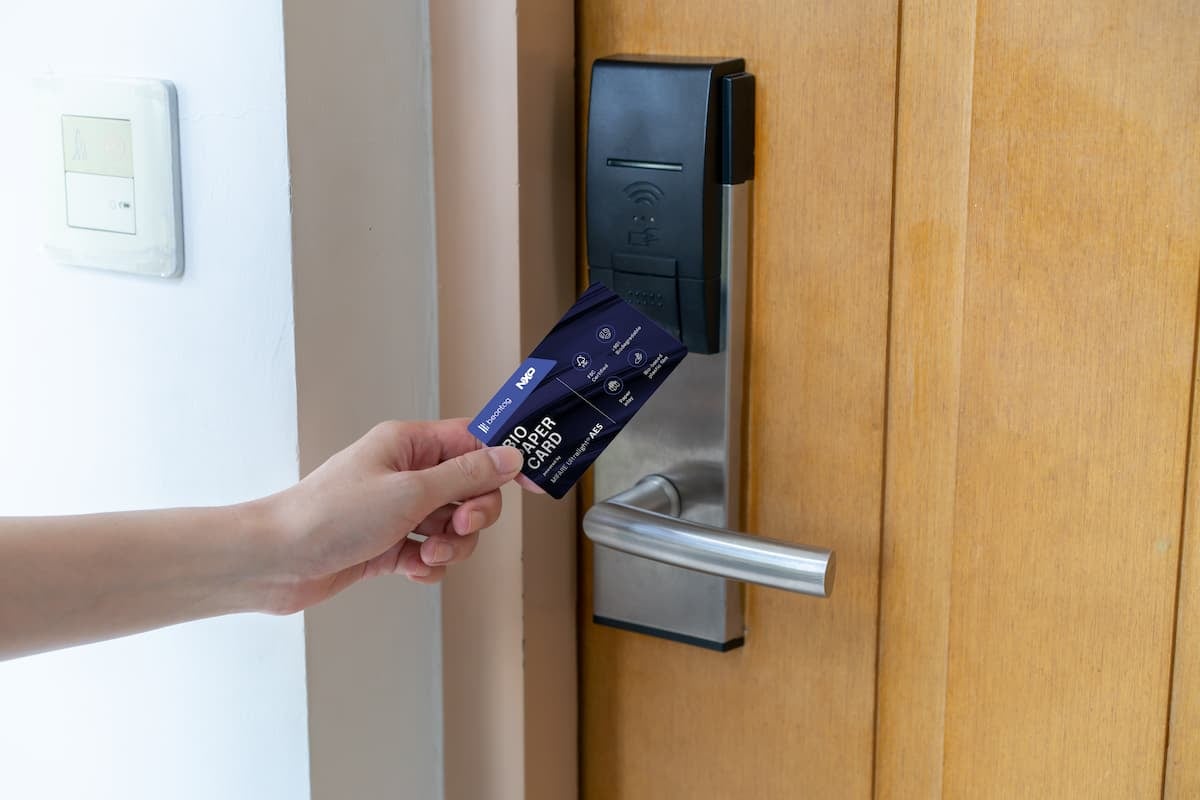
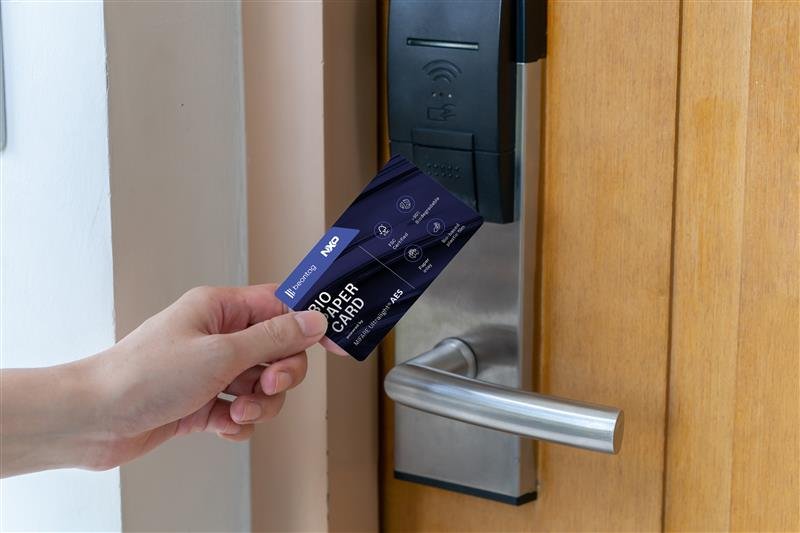
High Frequency (HF) RFID operates at 13.56 MHz and includes NFC technology. HF RFID is widely used for ticketing, authentication, access control, healthcare, and consumer engagement applications. NFC allows smartphones to communicate directly with RFID-enabled products.
Ultra-High Frequency (UHF) RFID operates between approximately 860 and 960 MHz. RAIN RFID is based on UHF technology and supports longer reading ranges, faster data collection, and bulk item reading. These capabilities make it highly effective for retail inventory, logistics, manufacturing, and supply chain tracking.
RFID technology supports a wide range of applications where automatic identification and real-time visibility create operational advantages. The ability to identify items without line-of-sight scanning allows organizations to improve efficiency, accuracy, and traceability across multiple industries.
While implementations vary, several application categories continue to drive RFID adoption globally.
Retailers use RFID technology to improve inventory accuracy, reduce stock discrepancies, and increase product availability.
Item-level RFID enables real-time visibility into inventory movement across stores, distribution centers, and fulfillment operations. Many leading retailers now rely on RFID as part of their omnichannel inventory strategies.
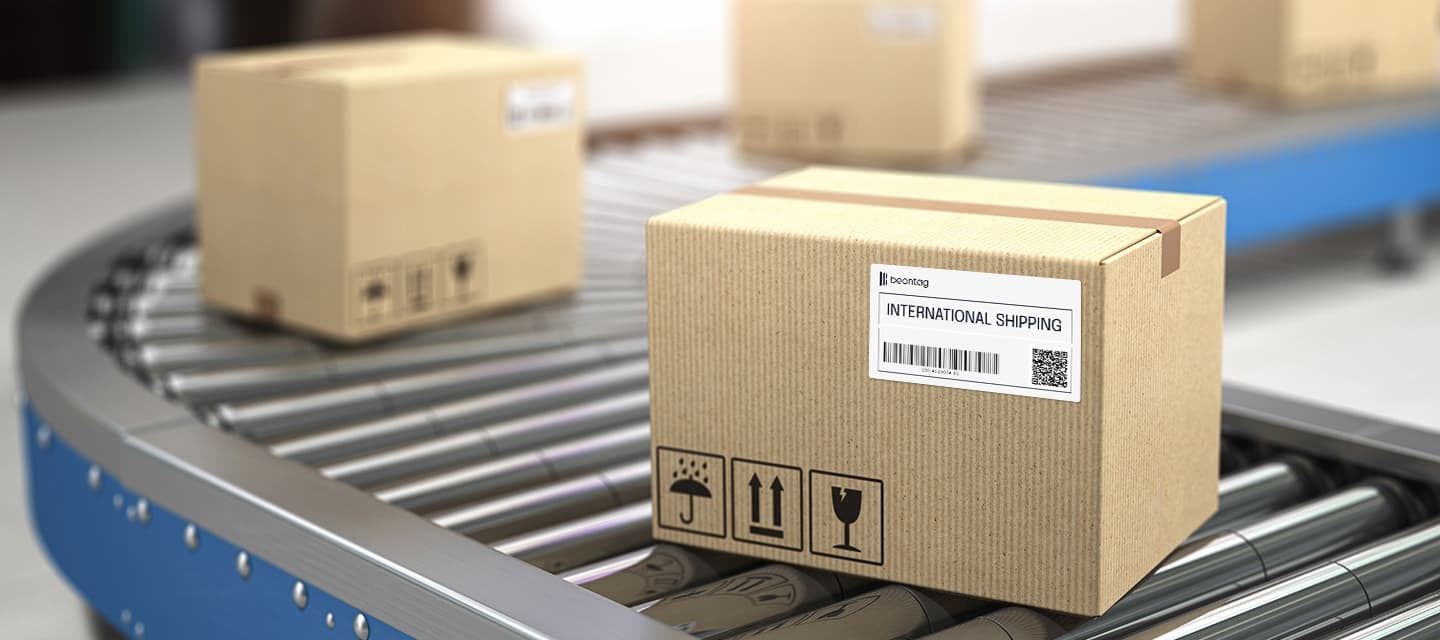
Supply chain operations use RFID to automate tracking and improve visibility throughout product journeys.
RFID chips help identify pallets, cartons, reusable transport items, and individual products without requiring manual scanning.
This automation improves efficiency while supporting faster and more accurate logistics operations.
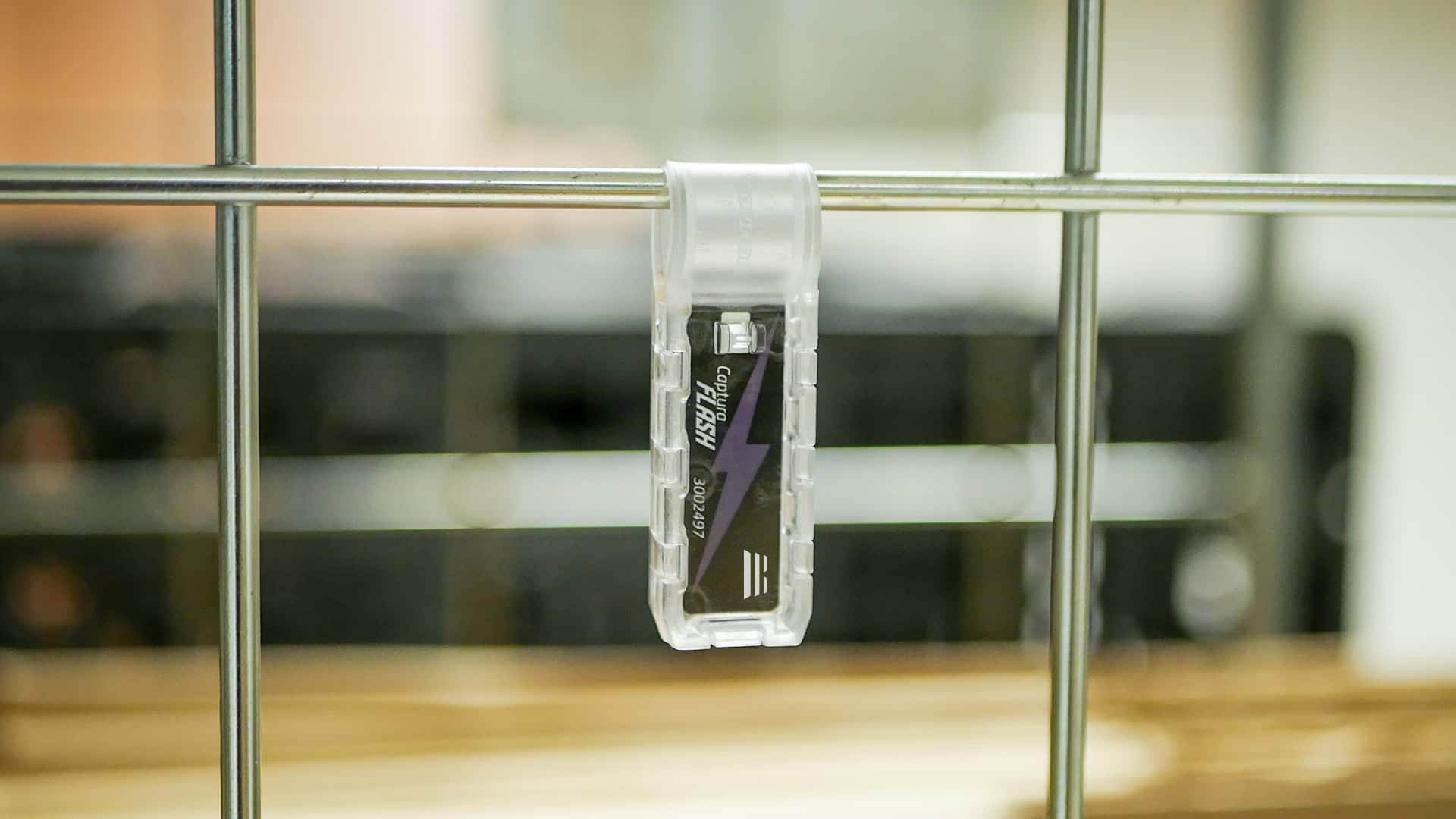
Manufacturers use RFID to track tools, equipment, work-in-process items, and returnable assets.
Industrial environments often require specialized RFID solutions designed to withstand metal surfaces, chemicals, heat, and demanding operating conditions.
These deployments help improve asset utilization and operational control.
RFID technology increasingly supports product authentication, consumer engagement, and connected packaging initiatives.
Brands can use RFID-enabled products to verify authenticity, deliver digital experiences, and provide enhanced product information through connected platforms.
This application area continues to expand as digital product passports and smart packaging initiatives gain momentum.
Check out more of Beontag’s applications for RFID.
Selecting an RFID chip solution requires evaluating the entire application rather than focusing solely on the chip itself. Performance depends on factors such as frequency, antenna design, environmental conditions, and the material being tagged.
The most successful RFID deployments begin with a clear understanding of operational requirements. These are some aspects you need to consider:
Metal, liquids, plastics, cardboard, and textiles all affect RFID performance differently. Understanding the material that needs to be tagged helps determine the appropriate inlay and tag design. Material compatibility is often one of the biggest factors influencing read performance.
The required reading distance should be defined before selecting an RFID solution. Some applications need short-range authentication, while others require long-range inventory or logistics visibility. Frequency and antenna design directly influence achievable read range.
Different RFID chips support different memory capacities and security features. Applications that require authentication, serialization, or consumer engagement may need more advanced chip capabilities. Data requirements should be considered early in the specification process.
Temperature, moisture, chemicals, physical stress, and outdoor exposure all influence RFID performance. Selecting a solution designed for the operating environment helps ensure long-term reliability. Durability requirements should be evaluated alongside read performance objectives.
Many RFID projects encounter challenges not because the technology is ineffective, but because specifications were based on assumptions rather than application requirements.
Successful deployments typically begin with testing and validation rather than selecting components solely based on technical specifications.
Some of the most common mistakes include:
Choosing the right RFID solution involves more than selecting a chip. Performance depends on the combination of frequency, inlay design, tag construction, and application-specific requirements.
Beontag develops RFID tags, labels, and inlays designed to support applications across retail, logistics, industrial operations, connected packaging, and product authentication. Its portfolio addresses a wide range of performance, durability, and scalability requirements.
Whether you are exploring RFID for inventory visibility, supply chain tracking, authentication, or smart packaging, explore our RFID portfolio and contact us to learn more about our solutions.